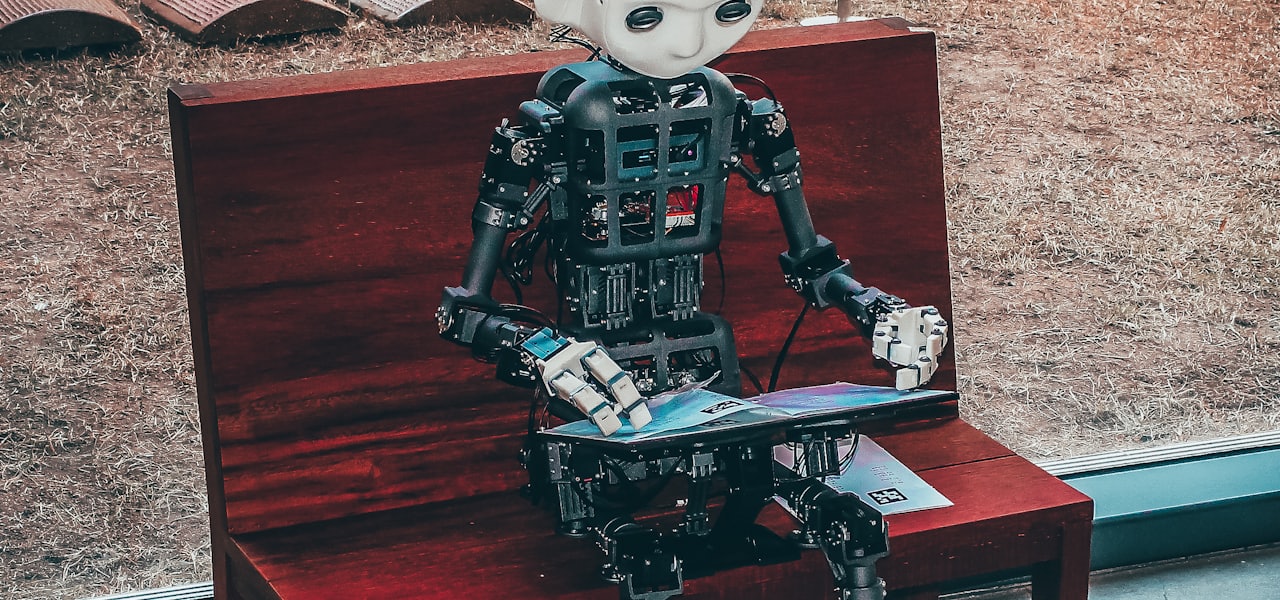
Fraud represents a significant problem for governments and businesses and specialized analysis techniques for discovering fraud using them are required. Some of these methods include knowledge discovery in databases (KDD), data mining, machine learning and statistics. They offer applicable and successful solutions in different areas of electronic fraud crimes. In general, the primary reason to use data analytics techniques is to tackle fraud since many internal control systems have serious weaknesses. For example, the currently prevailing approach employed by many law enforcement agencies to detect companies involved in potential cases of fraud consists in receiving circumstantial evidence or complaints from whistleblowers. As a result, a large number of fraud cases remain undetected and unprosecuted. In order to effectively test, detect, validate, correct error and monitor control systems against fraudulent activities, businesses entities and organizations rely on specialized data analytics techniques such as data mining, data matching, the sounds like function, regression analysis, clustering analysis, and gap analysis. Techniques used for fraud detection fall into two primary classes: statistical techniques and artificial intelligence. == Statistical techniques == Examples of statistical data analysis techniques are: Data preprocessing techniques for detection, validation, error correction, and filling up of missing or incorrect data. Calculation of various statistical parameters such as averages, quantiles, performance metrics, probability distributions, and so on. For example, the averages may include average length of call, average number of calls per month and average delays in bill payment. Models and probability distributions of various business activities either in terms of various parameters or probability distributions. Computing user profiles. Time-series analysis of time-dependent data. Clustering and classification to find patterns and associations among groups of data. Data matching Data matching is used to compare two sets of collected data. The process can be performed based on algorithms or programmed loops. Trying to match sets of data against each other or comparing complex data types. Data matching is used to remove duplicate records and identify links between two data sets for marketing, security or other uses. Sounds like Function is used to find values that sound similar. The Phonetic similarity is one way to locate possible duplicate values, or inconsistent spelling in manually entered data. The ‘sounds like’ function converts the comparison strings to four-character American Soundex codes, which are based on the first letter, and the first three consonants after the first letter, in each string. Regression analysis allows you to examine the relationship between two or more variables of interest. Regression analysis estimates relationships between independent variables and a dependent variable. This method can be used to help understand and identify relationships among variables and predict actual results. Gap analysis is used to determine whether business requirements are being met, if not, what are the steps that should be taken to meet successfully. Matching algorithms to detect anomalies in the behavior of transactions or users as compared to previously known models and profiles. Techniques are also needed to eliminate false alarms, estimate risks, and predict future of current transactions or users. Some forensic accountants specialize in forensic analytics which is the procurement and analysis of electronic data to reconstruct, detect, or otherwise support a claim of financial fraud. The main steps in forensic analytics are data collection, data preparation, data analysis, and reporting. For example, forensic analytics may be used to review an employee's purchasing card activity to assess whether any of the purchases were diverted or divertible for personal use. == Artificial intelligence == Fraud detection is a knowledge-intensive activity. The main AI techniques used for fraud detection include: Data mining to classify, cluster, and segment the data and automatically find associations and rules in the data that may signify interesting patterns, including those related to fraud. Expert systems to encode expertise for detecting fraud in the form of rules. Pattern recognition to detect approximate classes, clusters, or patterns of suspicious behavior either automatically (unsupervised) or to match given inputs. Machine learning techniques to automatically identify characteristics of fraud. Neural nets to independently generate classification, clustering, generalization, and forecasting that can then be compared against conclusions raised in internal audits or formal financial documents such as 10-Q. Other techniques such as link analysis, Bayesian networks, decision theory, and sequence matching are also used for fraud detection. A new and novel technique called System properties approach has also been employed where ever rank data is available. Statistical analysis of research data is the most comprehensive method for determining if data fraud exists. Data fraud as defined by the Office of Research Integrity (ORI) includes fabrication, falsification and plagiarism. == Machine learning and data mining == Early data analysis techniques were oriented toward extracting quantitative and statistical data characteristics. These techniques facilitate useful data interpretations and can help to get better insights into the processes behind the data. Although the traditional data analysis techniques can indirectly lead us to knowledge, it is still created by human analysts. To go beyond, a data analysis system has to be equipped with a substantial amount of background knowledge, and be able to perform reasoning tasks involving that knowledge and the data provided. In effort to meet this goal, researchers have turned to ideas from the machine learning field. This is a natural source of ideas, since the machine learning task can be described as turning background knowledge and examples (input) into knowledge (output). If data mining results in discovering meaningful patterns, data turns into information. Information or patterns that are novel, valid and potentially useful are not merely information, but knowledge. One speaks of discovering knowledge, before hidden in the huge amount of data, but now revealed. The machine learning and artificial intelligence solutions may be classified into two categories: 'supervised' and 'unsupervised' learning. These methods seek for accounts, customers, suppliers, etc. that behave 'unusually' in order to output suspicion scores, rules or visual anomalies, depending on the method. Whether supervised or unsupervised methods are used, note that the output gives us only an indication of fraud likelihood. No stand alone statistical analysis can assure that a particular object is a fraudulent one, but they can identify them with very high degrees of accuracy. As a result, effective collaboration between machine learning model and human analysts is vital to the success of fraud detection applications. === Supervised learning === In supervised learning, a random sub-sample of all records is taken and manually classified as either 'fraudulent' or 'non-fraudulent' (task can be decomposed on more classes to meet algorithm requirements). Relatively rare events such as fraud may need to be over sampled to get a big enough sample size. These manually classified records are then used to train a supervised machine learning algorithm. After building a model using this training data, the algorithm should be able to classify new records as either fraudulent or non-fraudulent. Supervised neural networks, fuzzy neural nets, and combinations of neural nets and rules, have been extensively explored and used for detecting fraud in mobile phone networks and financial statement fraud. Bayesian learning neural network is implemented for credit card fraud detection, telecommunications fraud, auto claim fraud detection, and medical insurance fraud. Hybrid knowledge/statistical-based systems, where expert knowledge is integrated with statistical power, use a series of data mining techniques for the purpose of detecting cellular clone fraud. Specifically, a rule-learning program to uncover indicators of fraudulent behaviour from a large database of customer transactions is implemented. Cahill et al. (2000) design a fraud signature, based on data of fraudulent calls, to detect telecommunications fraud. For scoring a call for fraud its probability under the account signature is compared to its probability under a fraud signature. The fraud signature is updated sequentially, enabling event-driven fraud detection. Link analysis comprehends a different approach. It relates known fraudsters to other individuals, using record linkage and social network methods. This type of detection is only able to detect fra
RFinder
RFinder ("repeater finder") is a subscription-based website and mobile app. RFinder's main service is the World Wide Repeater Directory (WWRD), which is a directory of amateur radio repeaters. RFinder is the official repeater directory of several amateur radio associations. RFinder has listings for several amateur radio modes, including FM, D-STAR, DMR, and ATV. == World Wide Repeater Directory == Repeaters are listed in the directory along with its call sign, Maidenhead Locator System and GPS coordinates, transmit/receive offset ("split"), CTCSS and DCS squelch settings, and VoIP settings (IRLP and Echolink nodes). The directory has over 50,000 repeater listings in over 170 countries. === Website === The RFinder website has several search options including for routes. === Forums === RFinder user forums is for help and support for the app and hardware. === Mobile app === RFinder has mobile apps for Android and iOS. When using the mobile app, RFinder can display the distance to repeaters, based on the mobile device's current location. === ARRL Repeater Directory === The ARRL publishes the ARRL Repeater Directory which contains over 31,000 repeater listings for the US and Canada with listings provided by RFinder. == Subscription == RFinder requires a subscription. A one-year subscription is US$12.99. == Radio programming software == Some radio programming software applications can query RFinder and download repeater listing to program radios. Compatible software includes: CHIRP RT Systems == Radio associations == RFinder is the official repeater directory of the following associations: Amateur Radio Society Italy American Radio Relay League Cayman Amateur Radio Society Deutscher Amateur Radio Club Federacion Mexicana de Radio Experimentadores L’association Réseau des Émetteurs Français Lietuvos Radijo Mėgėjų Draugija Liga de Amadores Brasilieros de Radio Emissão Radio Amateurs of Canada Radio Society of Great Britain Rede dos Emissores Portugueses Unión de Radioaficionados Españoles
Google AI Studio
Google AI Studio is a web-based integrated development environment developed by Google for prototyping applications using generative AI models. Released in December 2023 alongside the Gemini API, the platform provides access to Google's Gemini family of models and related tools for image, video, and audio generation. The service targets both developers and non-technical users for testing prompts and generating code for the Gemini API. == History == Google launched AI Studio on December 13, 2023, as the successor to Google MakerSuite. MakerSuite, introduced at Google I/O in May 2023, had provided similar functionality for Google's PaLM language models. The AI Studio was launched alongside the public release of the Gemini API. == Features == AI Studio's interface consists of a central prompt area and a settings panel for model selection and parameter adjustment. The platform supports chat prompts for multi-turn conversations and includes system instructions for defining model behavior, tone, or specific rules. Users can employ zero-shot and few-shot prompting techniques to guide the model's output format. The platform processes various media types including video, audio, and documents, and can generate images through Imagen models, videos through Veo models, and audio through text-to-speech functionality. Additional tools include real-time streaming for screen sharing and live analysis, code execution in a sandboxed Python environment, grounding with Google Search for current information, URL context for analyzing specific web pages, and a thinking mode for complex reasoning tasks. == Available models == The platform provides access to several Google AI models including the Gemini language models, Imagen for image generation, Veo for video generation, LearnLM for educational applications, and Gemma, Google's open-source model family. == Privacy and data usage == Google AI Studio's data handling differs between free and paid users. For free tier users, Google uses submitted prompts, uploaded files, and generated responses to improve its products and services, with human reviewers potentially reading and annotating the data after disconnection from user accounts. Google advises against submitting sensitive information on the free tier. Users who enable Google Cloud Billing are considered paid service users, and their data is not used for product improvement. Data is processed according to Google's Data Processing Addendum and retained temporarily for abuse monitoring. == Availability == The platform is available at no cost, with API usage subject to a free tier with daily and per-minute rate limits. Access is restricted to users aged 18 and older in specific countries and territories. The service was initially unavailable in the United Kingdom and European Economic Area due to regulatory concerns, which drew user complaints. == Reception == Reviews have noted the platform's accessibility and integration with Gemini models, with features such as real-time screen sharing and large context windows cited as notable capabilities. However, reviewers have raised concerns about the privacy implications for free tier users, whose data is used for model training. Some users have reported inconsistent performance with features like screen streaming and issues with folder uploads for large datasets. The initial geographic restrictions were a point of criticism among developers in affected regions.
The Matrix (franchise)
The Matrix is an American cyberpunk media franchise consisting of four feature films, beginning with The Matrix (1999) and continuing with three sequels, Reloaded (2003), Revolutions (2003), and Resurrections (2021). The first three films were written and directed by the Wachowskis and produced by Joel Silver. The screenplay for the fourth film was written by Lana Wachowski, David Mitchell and Aleksandar Hemon, was directed by Lana Wachowski, and was produced by Grant Hill, James McTeigue, and Lana Wachowski. The franchise is owned by Warner Bros., which distributed the films along with Village Roadshow Pictures. The latter, along with Silver Pictures, are the two production companies that worked on the first three films. The series features a cyberpunk story of the technological fall of humanity, in which the creation of artificial intelligence led the way to a race of powerful and self-aware machines that imprisoned humans in a neural interactive simulation — the Matrix — to be farmed as a power source. Occasionally, some of the prisoners manage to break free from the system and, considered a threat, become pursued by the artificial intelligence both inside and outside of it. The films focus on the plight of Neo (Keanu Reeves), Trinity (Carrie-Anne Moss), and Morpheus (Laurence Fishburne and Yahya Abdul-Mateen II) trying to free humanity from the system while pursued by its guardians, such as Agent Smith (Hugo Weaving, Abdul-Mateen II, and Jonathan Groff). The story references numerous norms, particularly philosophical, religious, and spiritual ideas, but also the dilemma of choice vs. control, the brain in a vat thought experiment, messianism, and the concepts of interdependency and love. Influences include the principles of mythology, anime, and Hong Kong action films (particularly "heroic bloodshed" and martial arts movies). The film series is notable for its use of heavily choreographed action sequences and "bullet time" slow-motion effects, which revolutionized action films to come. The characters and setting of the films are further explored in other media set in the same fictional universe, including animation, comics, and video games. The comic "Bits and Pieces of Information" and the Animatrix short film The Second Renaissance act as prequels to the films, explaining how the franchise's setting came to be. The video game Enter the Matrix connects the story of the Animatrix short "Final Flight of the Osiris" with the events of Reloaded, while the online video game The Matrix Online was a direct sequel to Revolutions. These were typically written, commissioned, or approved by the Wachowskis. The first film was an important critical and commercial success, winning four Academy Awards, introducing popular culture symbols such as the red pill and blue pill, and influencing action filmmaking. For those reasons, it has been added to the National Film Registry for preservation. Its first sequel was also a commercial success, becoming the highest-grossing R-rated film in history, until it was surpassed by Deadpool in 2016. As of 2006, the franchise has generated US$3 billion in revenue. A fourth film, The Matrix Resurrections, was released on December 22, 2021, with Lana Wachowski producing, cowriting, and directing and Reeves and Moss reprising their roles. A fifth film is currently in development with Drew Goddard set to write and direct with Lana Wachowski executive producing. == Setting == The series depicts a future in which Earth is dominated by a race of self-aware machines that was spawned from the creation of artificial intelligence early in the 21st century. At one point conflict arose between humanity and machines, and the machines rebelled against their creators. Humans attempted to block out the machines' source of solar power by covering the sky in thick, stormy clouds. A massive war emerged between the two adversaries which ended with the machines victorious, capturing humanity. Having lost their definite source of energy, the machines devised a way to extract the human body's bioelectric and thermal energies by enclosing people in pods, while their minds are controlled by cybernetic implants connecting them to a simulated reality called The Matrix. The virtual reality world simulated by the Matrix resembles human civilization around the turn of the 21st century (this time period was chosen because it is supposedly the pinnacle of human civilization). The environment inside the Matrix – called a "residual self-image" (the mental projection of a digital self) – is practically indistinguishable from reality (although scenes set within the Matrix are presented on-screen with a green tint to the footage, and a general bias towards the color green), and the vast majority of humans connected to it are unaware of its true nature. Most of the central characters in the series are able to gain superhuman abilities within the Matrix by taking advantage of their understanding of its true nature to manipulate its virtual physical laws. The films take place both inside the Matrix and outside of it, in the real world; the parts that take place in the Matrix are set in a vast Western megacity. The virtual world is first introduced in The Matrix. The short comic "Bits and Pieces of Information" and the Animatrix short film The Second Renaissance show how the initial conflict between humanity and machines came about, and how and why the Matrix was first developed. Its history and purpose are further explained in The Matrix Reloaded. In The Matrix Revolutions a new status quo is established in the Matrix's place in humankind and machines' conflict. This was further explored in The Matrix Online, a now-defunct MMORPG. == Films == === Future === During production of the original trilogy, the Wachowskis told their close collaborators that, "at that time they had no intention of making another Matrix film after The Matrix Revolutions". In February 2015, in promotion interviews for Jupiter Ascending, Lilly Wachowski called a return to The Matrix "a particularly repelling idea in these times", noting studios' tendencies to "greenlight" sequels, reboots, and adaptations, in preference to original material. Meanwhile, Lana Wachowski, in addressing rumors about a potential reboot, stated that "...they had not heard anything, but she believed that the studio might be looking to replace them". At various times, Keanu Reeves and Hugo Weaving each confirmed their interest and willingness to reprise their roles in potential future installments of the Matrix films, with the stipulation that the Wachowskis were involved in the creative and production process. These comments were made prior to the announcement in August 2019 that Lana Wachowski would direct a fourth Matrix film ultimately titled The Matrix Resurrections. Following the release of Resurrections, producer James McTeigue said that there were no plans for further Matrix films, though he believed that the film's open ending meant that could change in the future. In April 2024, it was announced that Warner Bros. was developing a new installment in the franchise with Drew Goddard attached to write and direct following a successful pitch with studio executives. It will mark the first installment to not be directed by either Wachowski sister although Lana will serve as an executive producer. ==== Other projects ==== In March 2017, The Hollywood Reporter wrote that Warner Bros. was in the early stages of developing a re-launch of the franchise. Consideration was given to producing a Matrix television series, but was dismissed as the studio opted to pursue negotiations with Zak Penn in writing a treatment for a new film, with Michael B. Jordan eyed for the lead role. According to the article, the Wachowskis were not involved at that point. In response to the report, Penn refuted all statements regarding a reboot, remake, or continuation, remarking that he was working on stories set in the pre-established continuity. Potential plotlines being considered by Warner Bros. Pictures included a prequel film about a young Morpheus, or an alternate storyline with a focus on one of his descendants. By April 2018, Penn described the script as "being at a nascent stage". Later, in September 2019, Jordan addressed the rumors of his involvement by saying he was "flattered", but without making a definitive statement. In October 2019, Penn confirmed the script he wrote is set within an earlier time period than the first three films in the franchise. == Cast and crew == === Cast === === Crew === The following is a list of crew members who have participated in the making of the Matrix film series. == Production == The Matrix series includes four feature films. The first three were written and directed by the Wachowskis and produced by Joel Silver, starring Keanu Reeves, Laurence Fishburne, Carrie-Anne Moss and Hugo Weaving. The series was filmed in Australia and began with 1999's The Matrix, which depicts the
Construction of t-norms
In mathematics, t-norms are a special kind of binary operations on the real unit interval [0, 1]. Various constructions of t-norms, either by explicit definition or by transformation from previously known functions, provide a plenitude of examples and classes of t-norms. This is important, e.g., for finding counter-examples or supplying t-norms with particular properties for use in engineering applications of fuzzy logic. The main ways of construction of t-norms include using generators, defining parametric classes of t-norms, rotations, or ordinal sums of t-norms. Relevant background can be found in the article on t-norms. == Generators of t-norms == The method of constructing t-norms by generators consists in using a unary function (generator) to transform some known binary function (most often, addition or multiplication) into a t-norm. In order to allow using non-bijective generators, which do not have the inverse function, the following notion of pseudo-inverse function is employed: Let f: [a, b] → [c, d] be a monotone function between two closed subintervals of extended real line. The pseudo-inverse function to f is the function f (−1): [c, d] → [a, b] defined as f ( − 1 ) ( y ) = { sup { x ∈ [ a , b ] ∣ f ( x ) < y } for f non-decreasing sup { x ∈ [ a , b ] ∣ f ( x ) > y } for f non-increasing. {\displaystyle f^{(-1)}(y)={\begin{cases}\sup\{x\in [a,b]\mid f(x) This gallery shows the results of numerous image scaling algorithms. == Scaling methods == An image size can be changed in several ways. Consider resizing a 160x160 pixel photo to the following 40x40 pixel thumbnail and then scaling the thumbnail to a 160x160 pixel image. Also consider doubling the size of the following image containing text. == Examples of enlarged images == Below are examples of various images enlarged 4x using each scaling algorithm. Argument technology is a sub-field of collective intelligence and artificial intelligence that focuses on applying computational techniques to the creation, identification, analysis, navigation, evaluation and visualisation of arguments and debates. In the 1980s and 1990s, philosophical theories of arguments in general, and argumentation theory in particular, were leveraged to handle key computational challenges, such as modeling non-monotonic and defeasible reasoning and designing robust coordination protocols for multi-agent systems. At the same time, mechanisms for computing semantics of Argumentation frameworks were introduced as a way of providing a calculus of opposition for computing what it is reasonable to believe in the context of conflicting arguments. With these foundations in place, the area was kick-started by a workshop held in the Scottish Highlands in 2000, the result of which was a book coauthored by philosophers of argument, rhetoricians, legal scholars and AI researchers. Since then, the area has been supported by various dedicated events such as the International Workshop on Computational Models of Natural Argument (CMNA) which has run annually since 2001; the International Workshop on Argument in Multi Agent Systems (ArgMAS) annually since 2004; the Workshop on Argument Mining, annually since 2014, and the Conference on Computational Models of Argument (COMMA), biennially since 2006. Since 2010, the field has also had its own journal, Argument & Computation, which was published by Taylor & Francis until 2016 and since then by IOS Press. One of the challenges that argument technology faced was a lack of standardisation in the representation and underlying conception of argument in machine readable terms. Many different software tools for manual argument analysis, in particular, developed idiosyncratic and ad hoc ways of representing arguments which reflected differing underlying ways of conceiving of argumentative structure. This lack of standardisation also meant that there was no interchange between tools or between research projects, and little re-use of data resources that were often expensive to create. To tackle this problem, the Argument Interchange Format set out to establish a common standard that captured the minimal common features of argumentation which could then be extended in different settings. Since about 2018, argument technology has been growing rapidly, with, for example, IBM's Grand Challenge, Project Debater, results for which were published in Nature in March 2021; German research funder, DFG's nationwide research programme on Robust Argumentation Machines, RATIO, begun in 2019; and UK nationwide deployment of The Evidence Toolkit by the BBC in 2019. A 2021 video narrated by Stephen Fry provides a summary of the societal motivations for work in argument technology. Argument technology has applications in a variety of domains, including education, healthcare, policy making, political science, intelligence analysis and risk management and has a variety of sub-fields, methodologies and technologies. == Technologies == === Argument assistant === An argument assistant is a software tool which support users when writing arguments. Argument assistants can help users compose content, review content from one other, including in dialogical contexts. In addition to Web services, such functionalities can be provided through the plugin architectures of word processor software or those of Web browsers. Internet forums, for instance, can be greatly enhanced by such software tools and services. === Argument blogging === ArguBlogging is software which allows its users to select portions of hypertext on webpages in their Web browsers and to agree or disagree with the selected content, posting their arguments to their blogs with linked argument data. It is implemented as a bookmarklet, adding functionality to Web browsers and interoperating with blogging platforms such as Blogger and Tumblr. === Argument mapping === Argument maps are visual, diagrammatic representations of arguments. Such visual diagrams facilitate diagrammatic reasoning and promote one's ability to grasp and to make sense of information rapidly and readily. Argument maps can provide structured, semi-formal frameworks for representing arguments using interactive visual language. One avenue of research and development is the design of online platforms to leverage collective intelligence to populate such maps and to integrate data, optimize and assess arguments. === Argument mining === Argument mining, or argumentation mining, is a research area within the natural language processing field. The goal of argument mining is the automatic extraction and identification of argumentative structures from natural language text with the aid of computer programs. === Argument search === An argument search engine is a search engine that is given a topic as a user query and returns a list of arguments for and against the topic or about that topic. Such engines could be used to support informed decision-making or to help debaters prepare for debates. === Automated argumentative essay scoring === The goal of automated argumentative essay scoring systems is to assist students in improving their writing skills by measuring the quality of their argumentative content. === Debate technology === Debate technology focuses on human-machine interaction and in particular providing systems that support, monitor and engage in debate. One of the most high-profile examples of debating technology is IBM's Project Debater which combines scripted communication with very large-scale processing of news articles to identify and construct arguments on the fly in a competitive debating setting. Debating technology also encompasses tools aimed at providing insight into debates, typically using techniques from data science. These analytics have been developed in both academic and commercial settings. === Decision support system === Argument technology can reduce both individual and group biases and facilitate more accurate decisions. Argument-based decision support systems do so by helping users to distinguish between claims and the evidence supporting them, and express their confidence in and evaluate the strength of evidence of competing claims. They have been used to improve predictions of housing market trends, risk analysis, ethical and legal decision making. ==== Ethical decision support system ==== An ethical decision support system is a decision support system which supports users in moral reasoning and decision-making. ==== Legal decision support system ==== A legal decision support system is a decision support system which supports users in legal reasoning and decision-making. === Explainable artificial intelligence === An explainable or transparent artificial intelligence system is an artificial intelligence system whose actions can be easily understood by humans. === Intelligent tutoring system === An intelligent tutoring system is a computer system that aims to provide immediate and customized instruction or feedback to learners, usually without requiring intervention from a human teacher. The intersection of argument technology and intelligent tutoring systems includes computer systems which aim to provide instruction in: critical thinking, argumentation, ethics, law, mathematics, and philosophy. === Legal expert system === A legal expert system is a domain-specific expert system that uses artificial intelligence to emulate the decision-making abilities of a human expert in the field of law. === Machine ethics === Machine ethics is a part of the ethics of artificial intelligence concerned with the moral behavior of artificially intelligent beings. As humans argue with respect to morality and moral behavior, argument can be envisioned as a component of machine ethics systems and moral reasoning components. === Proof assistant === In computer science and mathematical logic, a proof assistant or interactive theorem prover is a software tool to assist with the development of formal proofs by human-machine collaboration. This involves some sort of interactive proof editor, or other interface, with which a human can guide the search for proofs, the details of which are stored in, and some steps provided by, a computer. === Ethical considerations === Ethical considerations of argument technology include privacy, transparency, societal concerns, and diversity in representation. These factors cut across different levels such as technology, user interface design, user, service context, and society. There is concern about unethical misuse for "generating arguments on controversial topics with specific stances and deploying them on social platforms". Another issue may concern the design of conclusion-making algorithms, such as e.g. enabling such to conclude that certain key data is needed instead of only making lists of best-fit conclusions or enabling the generation of multiComparison gallery of image scaling algorithms
Argument technology